
Overview:
To prepare for a job fair: check which employers are attending and pick five to prioritize, bring about ten copies of your resume, and dress one step above the job. Open each conversation by asking what roles they're hiring for, then connect your experience to their answer. Before leaving a table, ask how best to follow up, then send a short email within two days. You don't need to register for our job fairs. Job Zone d'emploi runs free prep workshops and one-on-one support across Cornwall, Stormont and Dundas.
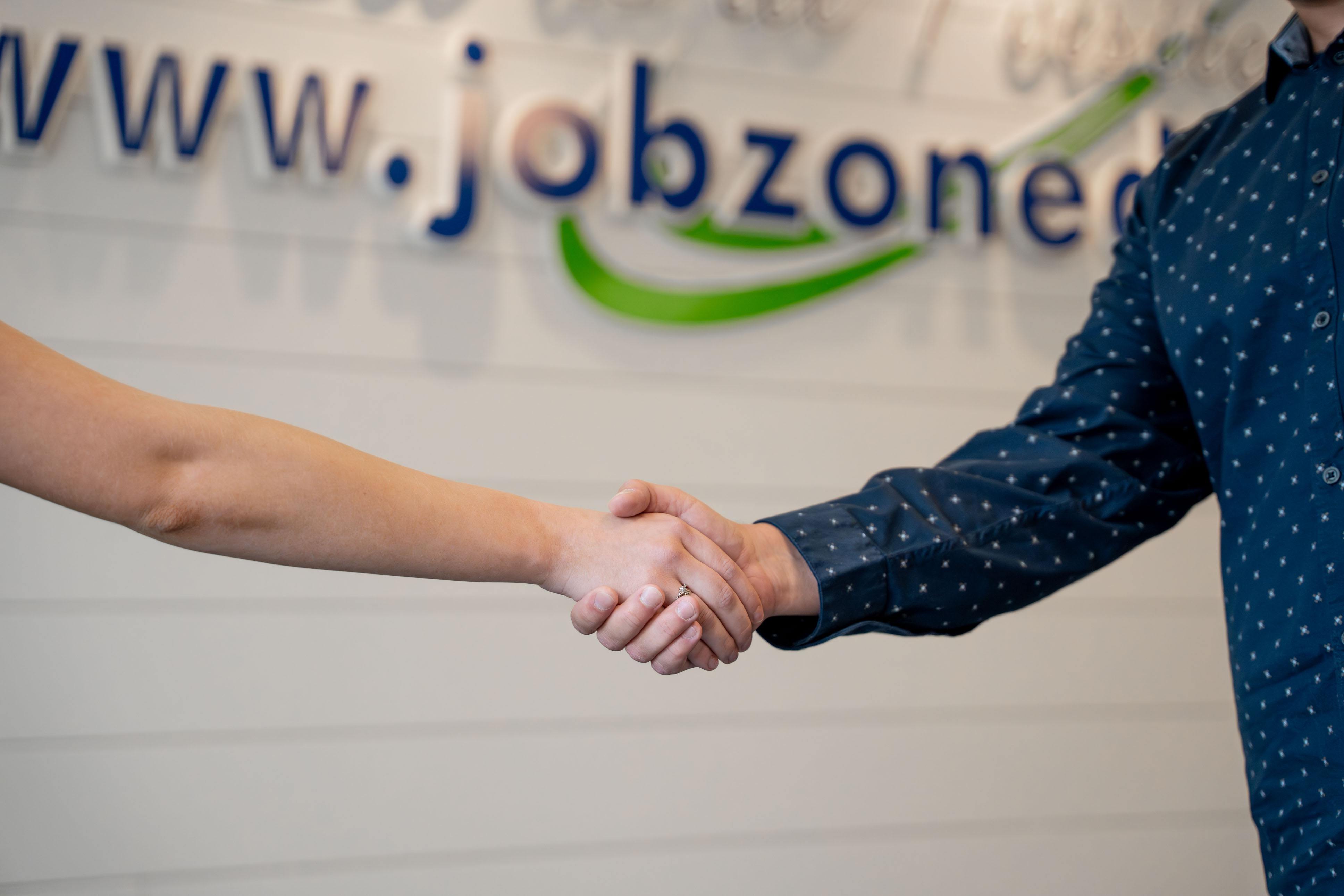
A job fair is one of the few times you get to be a person before you're a resume.
Plenty of employers will still ask you to apply online afterward — for a lot of them, that's simply how hiring has to work. But there's a real difference between being one file in a stack and being the person the hiring manager already met. At a job fair, the people making those decisions are often the ones standing at the table.
That's the opportunity. It's also why people find it nerve-wracking.
Here's what helps — before you go, while you're there, and in the days after.
Before you go
Find out who's coming
Most fairs publish the employer list beforehand. Read it and pick five you'd genuinely want to work for. Walking in with a short list turns a crowded room into a plan.
Bring more resumes than you think you need
Ten is a good number. They're free to print at our Resource & Career Centre if you need copies.
Don't have a resume?
Come anyway to get familiar with the flow of the day, make connections, and build your confidence with real world experience. If you'd like help with your resume, or getting job-ready as whole, we're here to help.
Dress one step above the job
If the role is in a warehouse, clean and tidy is right. If it's an office, business casual. You're not trying to look like a different person — just like someone who took the day seriously.
Charge your phone
You'll want it for notes, and possibly to pull up a resume you emailed yourself.
When you arrive
You don't need to register
At our fairs, you simply walk in and our team will guide you in the right direction.
Take a lap first
See who's where, notice where the employers you are interested in are, get your bearings.
KEY NOTE: Sometimes employers are spread across different rooms.
Start with a table that isn't your top choice
Your first conversation is always the stiffest one. Have it with an employer you're curious about rather than the one you most want to impress, and by the time you reach your top pick, you'll have warmed up.
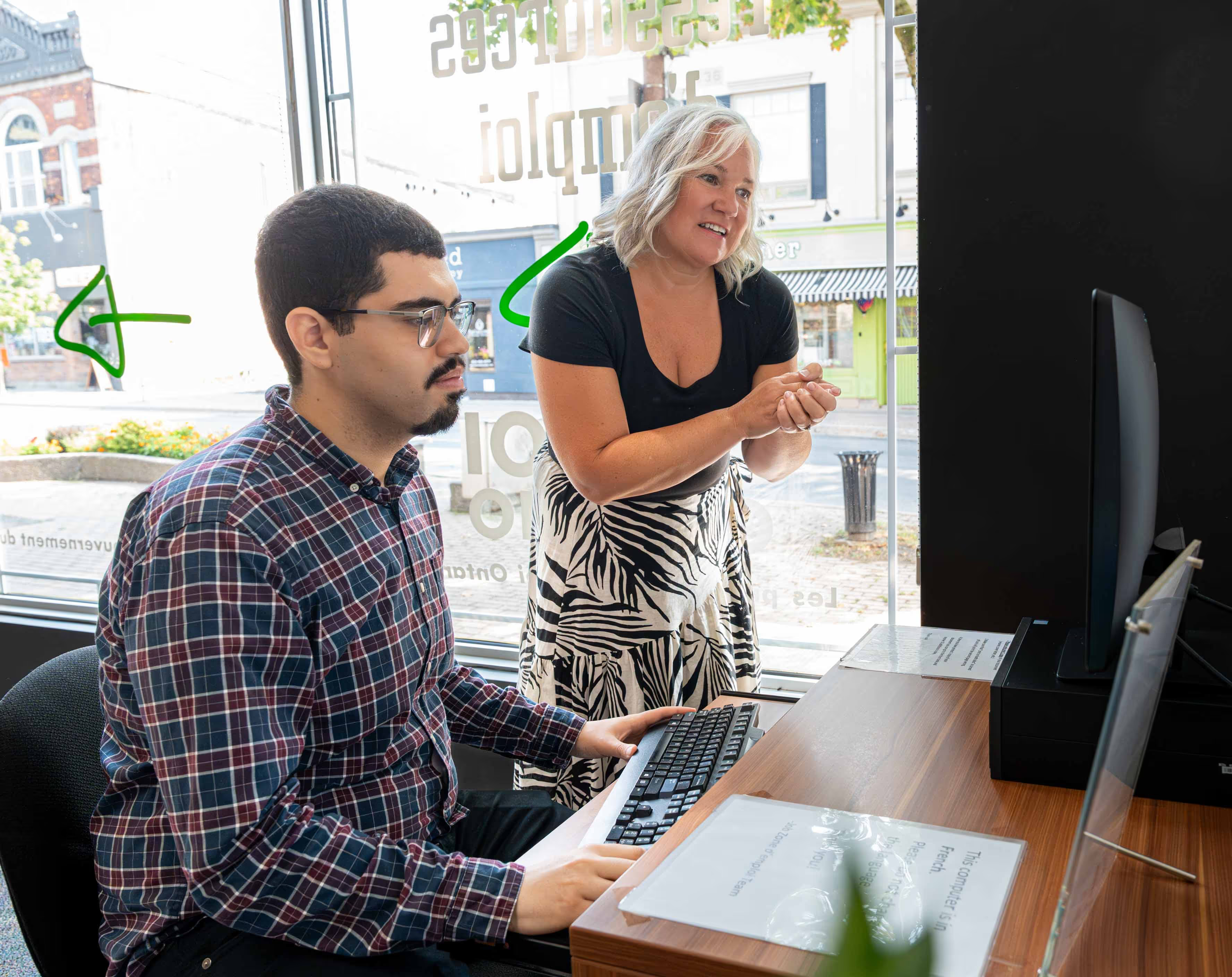
What to say
This is the part people worry about most, but it can be simpler than you think.
Open by asking what they need:
"Hi, I'm [name]. What kind of roles are you hoping to fill today?"
That flips the usual script. Most people open with thirty seconds about themselves before the employer knows whether it's relevant. Asking first saves everyone time, gets them talking, and lets you shape what you say next around what they just told you.
Then connect yourself to the answer
A sentence or two is plenty. What you've done, or what you're working toward.
Ask something real
A few that work:
- "What does a typical day look like on your team?"
- "What do people who do well here have in common?"
- "Is there anything that would make someone stand out for this role?"
End with the follow-up question
Before you walk away, ask: "What's the best way to follow up with you?"
This can help you turn a conversation into an actionable next step.
Right after each conversation
Write down the name, company, and one specific detail from the conversation. After six tables, they blur together. This detail is what helps make your follow-up email be more personalized.
Take the thirty seconds of typing off to the side to save you a week from now where you may ask: "was that the one who mentioned the night shift, or the other one?"
The part almost everyone skips
Some people leave a job fair with a handful of cards and never send a single email. A quick follow-up can be one way to stay top of mind.
For example, you could say:
Hi [name], we spoke at the job fair on Wednesday — I'm the one who asked about [the detail you wrote down]. I'm still very interested in [role]. I've attached my resume, and I'd be glad to talk further.
If you're going without much experience
If you're starting your first job, coming back after time away, or new to Canada, a room full of employers can feel like it's meant for other people. But it isn't.
Employers come to job fairs precisely because they want to meet people they wouldn't find in a stack of resumes — the person whose attitude doesn't come across on paper, who can start next week, who's willing to learn. That's a real advantage, and it exists through in person conversations.
However, be sure to only say what's true. "I haven't worked in this field, but I've wanted to get into it and I learn quickly" is a perfectly good sentence.
How we can help you get ready
Everything above, you can do on your own. But a few of these go considerably better with someone in your corner.
Our team can help you:
- Build or sharpen your resume — including tailoring it to the specific employers attending
- Practice your opener out loud — it's a different thing said aloud than read on a page
- Figure out which employers actually fit what you're looking for
- Work out a follow-up plan so the conversations turn into something
We also run free prep workshops before major job fairs, and one-on-one appointments any time. Plus, all of our services are completely free.
We're also at the fairs themselves. If you get there and feel stuck, find a Job Zone d'emploi staff member. That's what we're there for.
See upcoming job fairs and events →
Start your conversation with us to get personalized support →
Common questions
Bring about ten copies of your resume, a pen and something to write on, and a short list of the employers you most want to talk to. Your phone is useful for jotting notes right after each conversation. If you don't have a resume, come anyway — you can still meet employers and get a feel for how the day works.
Dress one step above what you'd wear on the job. For warehouse or trades roles, clean and tidy is right. For office roles, business casual works well. You're not trying to look like a different person — just like someone who took the day seriously.
Start by asking what they need: "Hi, I'm [name]. What kind of roles are you hoping to fill today?" Then connect your experience to their answer in a sentence or two. Before you walk away, ask what the best way is to follow up — that's what turns a friendly chat into an actual next step.
No. Job fairs are free and open to everyone, and plenty of people attend without a resume. You can still meet employers, ask questions, and build your confidence. If you'd like a resume before the next one, our team can help you put one together.

Want help getting job ready?
Meet Humberto.
Hi, I’m one of the job counsellors at Job Zone d’emploi who works with job seekers—like you! My goal is to make your job search clear and easy, and we can start with a casual conversation. I’ll be here as your point person for any questions or next steps.